

Air Suspension Failure Signs Philippines: What Every Mechanic Should Check First
A customer pulls in with a European sedan sitting noticeably lower on one corner, or an SUV that bounces long after it clears a pothole instead of settling immediately.
The owner usually describes it the same way every time: the ride feels wrong, and sometimes there is a dashboard warning they cannot explain. This is where a shop either looks confident or looks like it is guessing.
Air suspension does not behave like a coil spring setup, and diagnosing it with coil spring instincts wastes time and burns customer trust. The system runs on compressed air instead of steel, which means the failure points are different: compressors, air springs, air lines, valve blocks, and height sensors, all working together to hold ride height. Recognizing air suspension failure signs in the Philippines means knowing which of these five points is actually failing before a single part gets ordered.
This article walks through the diagnostic order that separates a five-minute fix from a comeback.
Why Air Suspension Systems Fail
An air suspension system holds a vehicle at the correct ride height using air springs at each corner, an air compressor that supplies pressure, a valve block that directs air to the right spring, air lines connecting everything, and height sensors that tell the system what the current ride height actually is. Every one of those components ages differently, and Philippine conditions accelerate several of them at once. Heat breaks down the rubber bellows in the air springs faster than in temperate climates. Flooded streets and stop-and-go traffic put extra load cycles on the compressor. Road debris and speed bumps stress the air lines and connectors more than a smooth highway would.
The result is that most air suspension complaints in a Philippine shop are not one dramatic failure. They are a slow accumulation of small ones. A tiny leak forces the compressor to run more often than it should. The extra runtime shortens the compressor's life. By the time the customer notices the car sagging, two components are already involved instead of one, and that changes both the diagnosis and the quote.
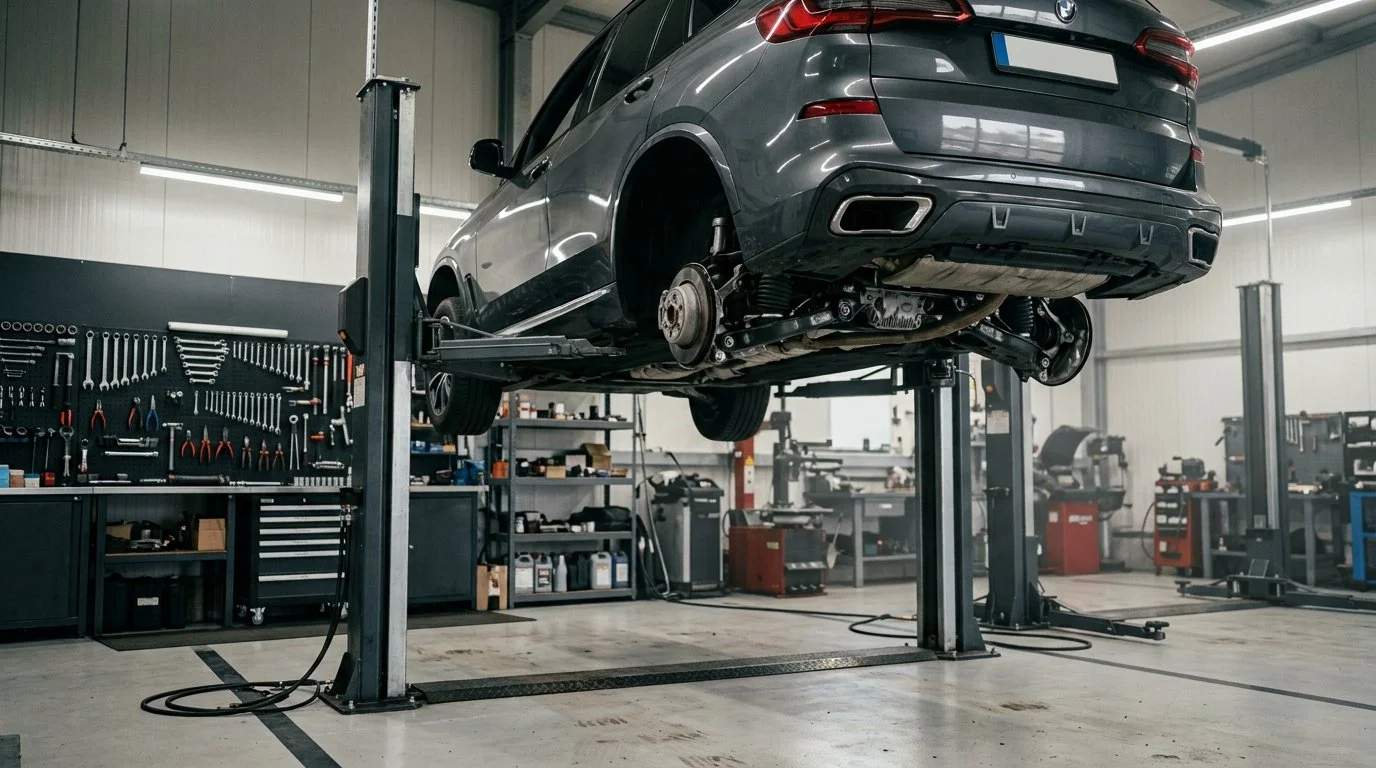
The 5 Warning Signs Every Mechanic Should Check
Run these in order. Each one narrows down which component is actually at fault before parts get pulled.
1. Uneven or sagging ride height.
Park the vehicle on level ground and check the gap between the wheel arch and the tire at all four corners. A vehicle that sags on one side, or sits noticeably lower than it did when it came in, points to an air spring leak on that corner or a valve block that is not distributing air evenly. If all four corners are low, suspect the compressor rather than a single spring.
2. Compressor running longer or more often than normal.
The compressor should cycle briefly to correct minor pressure loss, then shut off. A compressor that runs continuously, cycles every few minutes, or runs immediately after the engine starts is compensating for an air leak somewhere in the system. Left unaddressed, this shortens the compressor's own service life because it is working far past its intended duty cycle.
3. Audible hissing near the springs, lines, or valve block.
With the engine off and the vehicle raised, listen closely at each air spring, the fittings on the air lines, and the valve block itself. A soap-and-water spray test on these points will show bubbles at the leak location. This is the fastest way to confirm a leak's exact location instead of replacing a component on a guess.
4. Dashboard warning light or ride height fault message.
Modern air suspension systems throw a specific warning, often something like a suspension fault light or a message limiting the vehicle to normal height only. Scan for fault codes before doing anything else. A height sensor malfunction code narrows the diagnosis considerably and can save an unnecessary spring replacement.
5. Bouncy, unstable, or delayed ride quality.
A vehicle that takes noticeably longer than usual to settle after a bump, or feels loose and wallowy through corners, often has a system running at reduced pressure across the board. This is usually the last sign to appear, by which point the compressor has likely been overworking for some time already.
Check ride height first thing in the morning before the vehicle has been driven. A system that sags overnight but corrects itself once the engine starts is telling you the leak is slow, which usually means a spring or fitting rather than a failed compressor.
Failure Severity: Early, Warning, Critical
| Stage | What You'll Observe | Likely Cause |
|---|---|---|
| Early | Compressor cycles slightly more often than before, ride height normal | Small leak starting at a fitting or spring seal |
| Warning | Visible sag on one or more corners, compressor runs frequently, dashboard message appears | Established leak, air spring or valve block wear |
| Critical | Vehicle will not hold ride height, compressor runs constantly or has stopped responding, suspension fault lockout | Compressor failure, major spring rupture, or multiple points failing together |
An early-stage leak and a critical compressor failure often get the same customer complaint: the car feels off. The difference is entirely in the diagnostic order. Catching it at the early stage is a fraction of the cost of catching it at critical.
What Happens When It Gets Ignored
A small air leak rarely stays a small air leak. The compressor is designed to run in short bursts, not continuously, and forcing it to compensate for a leak around the clock shortens its service life considerably. This is how a customer's small fitting problem quietly becomes a compressor replacement a few months later. There is also a safety dimension worth explaining to the customer directly. A vehicle riding on a partially deflated air spring has reduced handling stability and uneven weight distribution, which matters most exactly when it is least convenient, during hard braking or an emergency lane change.
A compressor that has been overworking for weeks due to an unaddressed leak is often close to failure itself. Quoting only the leaking spring without inspecting compressor condition is a common source of comeback complaints on air suspension jobs.
Why This Protects Shop Reputation
Air suspension has a reputation among car owners as expensive and mysterious, and much of that reputation comes from shops that replace parts by guesswork instead of diagnosis. A mechanic who can walk a customer through exactly which of the five points is failing, and why, is doing something most competing shops cannot. That explanation is what separates a shop the customer trusts with a premium European vehicle from one they only use for oil changes.
This matters even more for shops building a reputation with fleet managers and multi-vehicle accounts, where a wrong diagnosis on one vehicle affects the decision to bring the rest of the fleet in. Getting the sequence right the first time, leak location before parts ordering, is what keeps that account coming back.
Frequently Asked Questions
Q: Why does my car sag overnight but look fine after I start it?
A: This points to a slow air leak rather than a compressor failure. The system loses pressure gradually while parked, and the compressor corrects it as soon as the engine starts and the system re-pressurizes. The leak still needs to be found and fixed, since it will keep shortening the compressor's life.
Q: Can an air suspension problem be just the compressor, or does it always mean the springs are bad too?
A: It can be either, and sometimes both. A compressor that has been running excessively due to an undetected leak elsewhere is often already stressed by the time it is inspected. Checking both the compressor's output and the spring seals in the same visit prevents a second repair a few weeks later.
Q: Is it safe to keep driving with a suspension warning light on?
A: Short distances at reduced speed are generally tolerable, but the vehicle should be inspected as soon as possible. Reduced ride height affects handling and braking behavior, and continuing to drive on a failing air spring or an overworking compressor accelerates damage to both.
Q: How is diagnosing air suspension different from a normal coil spring inspection?
A: A coil spring inspection is largely visual and mechanical. Air suspension diagnosis requires checking pressure, listening or testing for leaks at multiple points, and often reading fault codes from the suspension control module. The failure point is rarely obvious just by looking underneath the vehicle.
Air Suspension Parts from AllMakes Philippines
AllMakes Philippines is expanding its parts catalogue to cover air suspension components for European vehicles across all models, alongside the Japanese and American SUVs and pickups already in our vehicle coverage.
Phone: +63 (02) 86620736
Email: sales@allmakesph.com