

Air Suspension Compressor Failure: Why It's Rarely the First Thing That Actually Broke
A customer brings in a vehicle with an air suspension system, and the complaint sounds simple. The compressor keeps running. Or it never runs at all. Either way, the instinct in most shops is the same: quote a new compressor and move on to the next car.
That instinct is understandable. The compressor is the loudest, most visible part of the system, and it usually announces trouble before anything else does. It is also the most expensive single component to replace, which means getting the diagnosis wrong costs the customer real money and costs the shop its credibility when the new compressor does not fix the problem.
A compressor that runs constantly is very often responding to a leak somewhere else in the system, not failing on its own. This article walks through the five signs that actually point to compressor failure, the order to check them in, and what separates a genuine compressor problem from a compressor doing exactly what a leaking air suspension system in the Philippines makes it do. It builds directly on the wider set of warning signs covered in Air Suspension Failure Signs Philippines, which is worth a read first if the complaint has not been narrowed down to the compressor yet.
- Why Compressor Failure Gets Blamed First (and Sometimes Wrongly)
- Sign 1: The Compressor Runs Almost Constantly
- Sign 2: Grinding, Whining, or Straining Noise on Startup
- Sign 3: The Compressor Housing Runs Hot or Smells Burnt
- Sign 4: Slow Fill or Never Reaching Full Ride Height
- Sign 5: The Compressor Does Not Engage At All
- The Diagnostic Order: Compressor vs. a Leak Somewhere Else
- Compressor Failure Severity at a Glance
- What Happens When Compressor Failure Gets Ignored
- Why This Protects Shop Reputation
- Frequently Asked Questions
Why Compressor Failure Gets Blamed First (and Sometimes Wrongly)
The compressor's job is straightforward. It builds and stores compressed air, then feeds it to the air struts or air springs on demand to adjust ride height and maintain support under load. Because it is the only part of the system that makes noise and draws obvious electrical current, it becomes the natural suspect the moment something feels wrong.
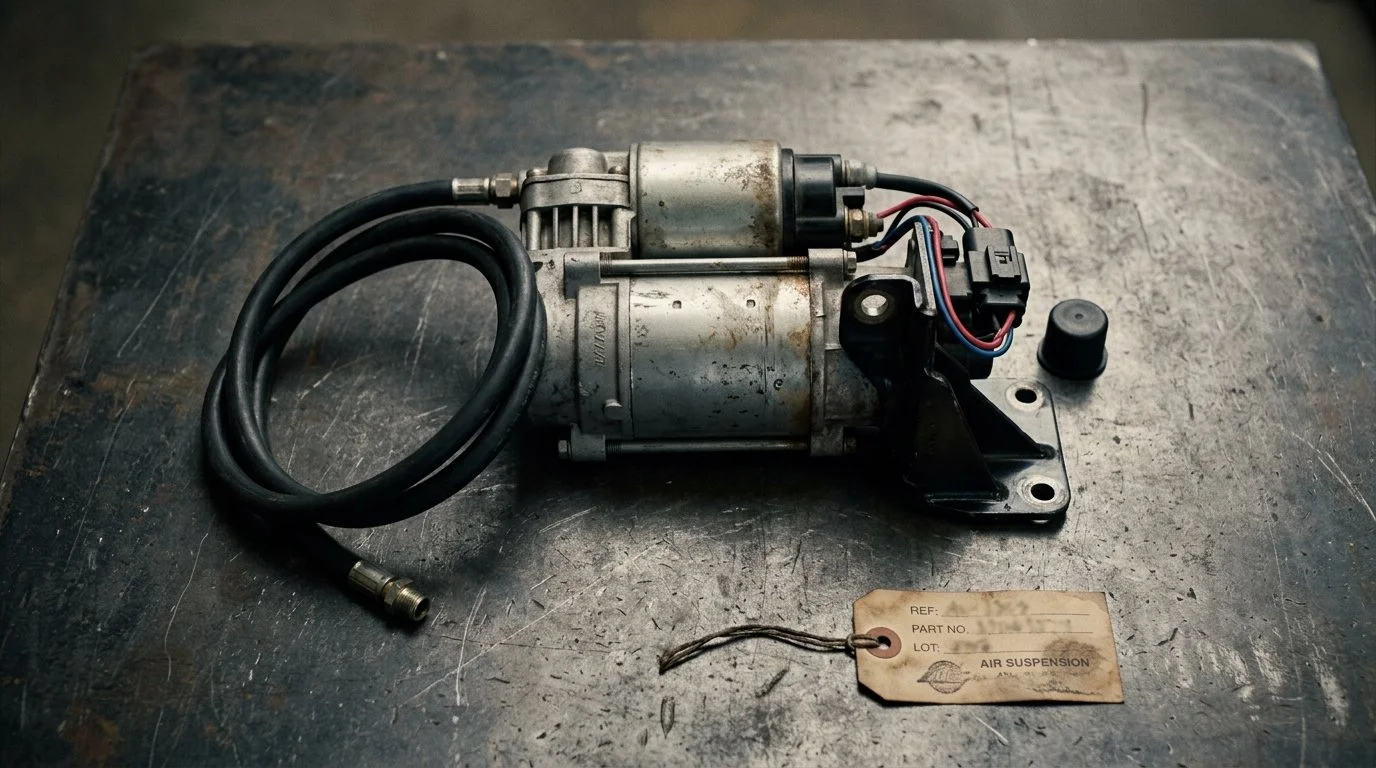
The problem is that the compressor's behavior is a symptom, not always a cause.
A compressor cycling constantly is frequently doing its job correctly. It is compensating for air escaping somewhere else in the system, at a strut seal, a line fitting, or a valve block, and running itself toward an early death in the process. Replacing the compressor without finding that leak means the new one fails on the same timeline as the old one, and the shop is the one explaining why the "fix" did not hold.
Sign 1: The Compressor Runs Almost Constantly
A healthy air suspension system runs its compressor in short bursts, usually only when the vehicle is started, loaded, or adjusting for road conditions. A compressor that cycles every few minutes, or that never fully shuts off, is working to replace air that is leaving the system faster than normal. On its own, this sign points more often to a leak than to the compressor itself. It becomes a compressor issue when the unit is running constantly and still cannot maintain ride height, which suggests the compressor is losing capacity as well as fighting a leak.
Sign 2: Grinding, Whining, or Straining Noise on Startup
Internal compressor components wear down with every cycle, and a compressor working overtime because of a leak wears out faster than one running on its normal schedule. A grinding or straining noise, especially one that gets louder as the compressor works to reach target pressure, usually means the internal piston or motor bearing is already degrading. A new, distinct whine that was not present a few months ago is worth logging and monitoring, since compressor noise rarely improves on its own.
Sign 3: The Compressor Housing Runs Hot or Smells Burnt
Compressors are built to run in short bursts with rest periods in between for cooling. A compressor that runs long enough to become hot to the touch, or that gives off a faint burnt electrical smell, has usually been working far past its designed duty cycle. In Philippine heat and traffic conditions, a compressor already struggling with a system leak reaches this point faster than published specifications suggest. This is one of the clearest signs that the compressor itself, not just the leak feeding it, needs attention before it fails completely.
Sign 4: Slow Fill or Never Reaching Full Ride Height
If the compressor runs, sounds normal, and stays cool, but the vehicle still takes an unusually long time to reach normal ride height, or never quite gets there, the compressor may be losing internal efficiency even without an obvious external symptom. This is harder to catch by ear and is best confirmed against the vehicle's documented fill time, where available, rather than by feel alone.
Sign 5: The Compressor Does Not Engage At All
A silent compressor is the sign most likely to actually be the compressor. If the system is clearly low or sagging and the compressor produces no sound, no vibration, and no draw at all when it should be cycling, the fault is most likely electrical (relay, fuse, or wiring) or a genuinely seized internal motor. This is the one scenario on this list where checking the leak first adds little value, since a compressor that will not turn on cannot be blamed on a leak elsewhere.
The Diagnostic Order: Compressor vs. a Leak Somewhere Else
Before ordering a replacement compressor, run the system through this sequence:
Check for audible leaks at strut connections, valve block fittings, and air line junctions with the engine off and the system pressurized.
Apply a soap-and-water solution to suspected fittings and look for bubbling, which isolates leaks a listening check alone will miss.
Time how long the compressor runs per cycle and how often it cycles over a fixed period, then compare against the vehicle's expected duty cycle.
Only after leaks are ruled out or repaired, evaluate the compressor on noise, heat, and fill performance in isolation.
Working through leaks first, before condemning the compressor, is the single habit that separates a shop that gets repeat business on air suspension work from one that gets call-backs.
Time the compressor before you touch anything. A stopwatch reading of cycle length and frequency, taken before diagnosis begins, gives you a baseline to compare against after any repair, and it is the single easiest way to prove to a customer that the fix actually worked.
Compressor Failure Severity at a Glance
| Stage | What You'll Notice | Likely Cause |
|---|---|---|
| Early | Compressor cycles more often than usual, otherwise sounds normal | System leak, compressor itself still healthy |
| Warning | New grinding or whining noise, housing warm to the touch | Compressor wearing out under sustained overwork |
| Critical | Burnt smell, or compressor silent and unresponsive | Compressor failure, motor seizure, or electrical fault |
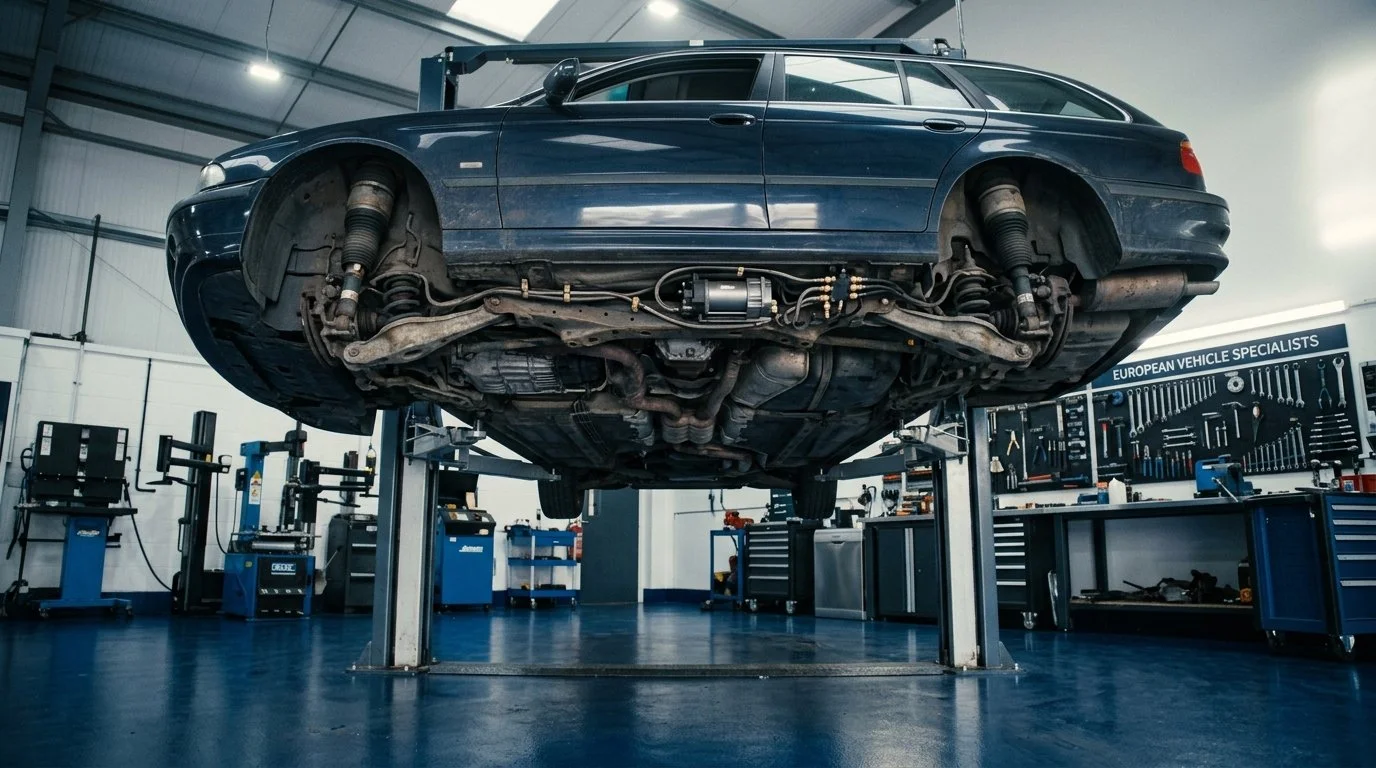
The Early stage in this table is the only one where the compressor is not actually the problem. Catching a customer at that stage, with a leak repair instead of a compressor replacement, is what separates a shop that saves the customer money from one that just replaces the loudest part.
What Happens When Compressor Failure Gets Ignored
A compressor left to run constantly against an unrepaired leak does not fail gracefully. It burns out its internal motor sooner than its rated lifespan, and depending on the system, a fully depleted air suspension can leave a vehicle sitting on its bump stops, which affects ride quality, ground clearance, and in some systems, drivability at low speed. What starts as a fixable leak, caught early, becomes a compressor replacement plus whatever seal or line repair should have been done from the start. The customer pays twice for a problem that could have been solved once.
A compressor that has already started smelling burnt or has gone completely silent should not be run again to "confirm" the diagnosis. Continuing to cycle a compressor at this stage risks a full motor seizure and, in some systems, damage to the relay or fuse circuit feeding it.
Why This Protects Shop Reputation
Air suspension repairs carry a higher price tag than most suspension work, and customers notice when the fix does not hold. A shop that replaces a compressor without checking for a leak first, and sees the same complaint return within weeks, is the shop the customer remembers for the wrong reason. Running the leak check before condemning the compressor takes a few extra minutes and turns into the explanation that makes a customer trust the diagnosis, not just the invoice. In a market where air suspension work is still relatively unfamiliar to most Philippine shops, being the one that diagnoses it correctly the first time is a real competitive advantage.
Frequently Asked Questions
Q: How long does an air suspension compressor usually last?
A: Compressor lifespan depends heavily on how often it has to run. A compressor working against a system leak wears out well before one operating on its normal duty cycle, which is why diagnosing and fixing leaks matters as much as the compressor itself.
Q: Can a failing compressor damage other parts of the air suspension system?
A: A compressor that overheats or seizes can trip an electrical fault that affects the relay or fuse feeding the system, and prolonged low pressure from a struggling compressor can leave the vehicle resting on its bump stops, which adds stress to the struts.
Q: Is it normal for the compressor to run when the vehicle is parked?
A: A brief cycle when the vehicle is started or after it has sat overnight is normal for many systems. A compressor that continues cycling repeatedly while parked and unused points to a leak that needs to be found, not a compressor issue on its own.
Q: Should the compressor be replaced at the same time as a strut or air spring repair?
A: Not automatically. If the compressor has not shown its own independent signs of failure, such as unusual noise, heat, or a silent no-start condition, replacing it alongside a strut repair is an added cost the vehicle may not need yet.
Air Suspension Parts from AllMakes Philippines
AllMakes Philippines has built its name as a cooling system specialist for the independent auto shops, parts retailers, and fleet managers who keep Philippine roads moving. Air suspension is a newer, complementary line as that same specialist standard extends into ride height, compressor, and air spring components.
The exact parts list and vehicle coverage for this line are still being finalized, and details will be shared as they are confirmed. In the meantime, this diagnostic guide is here so shops can approach a compressor complaint with the right order of checks, whichever vehicle it happens to be sitting on the lift.
Phone: +63 (02) 86620736
Email: sales@allmakesph.com