

Water Pump Failure: 5 Early Warning Signs Filipino Mechanics Catch Before the Engine Pays the Price
Water pump failure is the leading cause of preventable engine overheating in Philippine road conditions. That fact alone should put it near the top of every mechanic's diagnostic checklist. But the more important truth about water pump failure signs is that they rarely appear all at once.
Most pumps give clear warning signals well before they stop working entirely. The mechanics who protect their customers' engines are the ones who recognize those signals while there is still time to act. The shops that build their reputation on catching preventable problems are the shops that understand what early water pump failure looks like before the temperature gauge starts doing the talking.
This article covers the five early warning signs of water pump failure that Filipino mechanics should know how to identify and explain. Each sign is ordered by how early it appears in the failure timeline, from the first catchable symptoms to the final moments before the damage becomes unavoidable. Understanding this sequence is what separates a shop that prevents engine damage from one that is left explaining it after the fact.
Sign 1: A Coolant Leak Near the Centre of the Engine
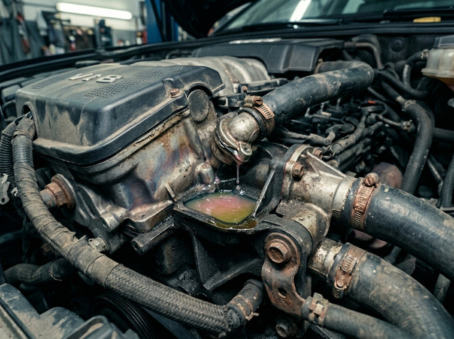
The earliest and most catchable sign of water pump failure in the Philippines is a small coolant puddle or drip appearing underneath the vehicle after it has been parked. The color varies depending on the coolant type, typically pinkish, orange, or green, but what matters more than the color is the location. When the water pump is the source, the drip appears toward the center or front of the engine bay rather than toward the rear.
The leak originates from one of two places: the pump's shaft seal or the pump gasket. Both are designed to contain coolant under pressure, and both can begin seeping before the pump itself fails mechanically.
At this early stage, the engine is likely running at completely normal temperatures. There is no noise, no gauge movement, and no visible steam. The only evidence is the small stain on the ground after the vehicle has been parked overnight.
This is the stage where catching the problem costs the least and protects the most. A seal that is weeping is a repair job. A pump that has failed completely and allowed the engine to overheat is a much harder conversation with the vehicle owner.
Sign 2: A Grinding or Whining Noise from the Engine Bay
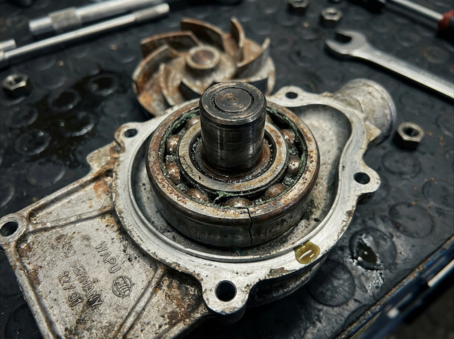
As the water pump bearing begins to wear, it produces a grinding or whining sound that is most noticeable when the engine is under load or at operating temperature. Some mechanics describe it as a low-frequency rumble from the front of the engine. Others catch it as a higher-pitched whine that increases with engine speed. The consistent factor is that the noise gets louder as the engine warms up and worsens under acceleration.
In Philippine road conditions, where stop-and-go traffic and extended engine idling are part of daily driving, bearing wear can progress faster than in cooler environments. Heat accelerates lubricant breakdown inside the bearing assembly, and a pump running through repeated heat cycles in traffic ages faster than factory service intervals might suggest.
When a customer reports a new noise that appears after warm-up and increases with engine revs, the water pump bearing is one of the first components worth inspecting. This noise does not resolve on its own. It becomes louder and more consistent until the bearing seizes and pump function stops entirely.
Sign 3: Engine Temperature Running Higher Than Normal
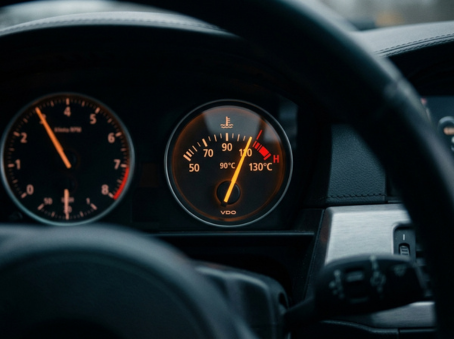
At this stage in the failure timeline, the pump is still moving coolant but no longer doing so at full efficiency. The temperature gauge has not entered the red zone, but it is sitting noticeably higher than its usual resting position. The vehicle owner may not report this as a problem because the engine has not technically overheated. They notice the gauge sitting slightly higher, assume it is normal variation, and continue driving.
A pump with worn impeller vanes, a loose impeller, or a bearing beginning to seize cannot circulate coolant through the system at the flow rate the engine requires. The cooling cycle runs slow, and the engine retains more heat than it should between the block and the radiator.
For mechanics servicing vehicles common in Philippine shops, including the BMW 3 Series, Toyota Fortuner, Mercedes-Benz E-Class, and Ford Ranger, a temperature gauge sitting at the high end of its normal range deserves attention during any routine inspection. This sign rarely appears in isolation. It typically accompanies sign 1 or sign 2 when those earlier symptoms were not caught and addressed.
Sign 4: Steam from Under the Hood
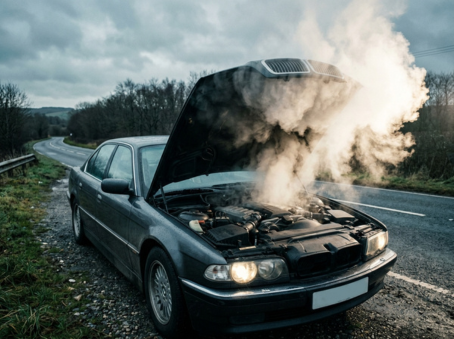
By the time steam appears from under the hood, the water pump has failed and coolant is no longer circulating to the radiator. The engine is producing heat that the cooling system cannot remove, and the coolant remaining in the system is approaching or has already reached its boiling point.
At this stage, the instruction is straightforward: stop the vehicle immediately and do not approach the radiator cap or any hose fitting until the engine has cooled completely. The pressure in a cooling system at or above boiling temperature can cause serious burns if any pressurized fitting is disturbed before the system has equalized.
Steam from under the hood is not a symptom to diagnose at the roadside. It is an outcome that every earlier sign in this list represented an opportunity to prevent. The vehicle owner who drove through signs 1, 2, and 3 without acting is now facing a repair job that may include head gasket damage, a warped cylinder head, or worse depending on how long the engine operated at critical temperature.
Sign 5: Coolant Contamination in the Engine Oil
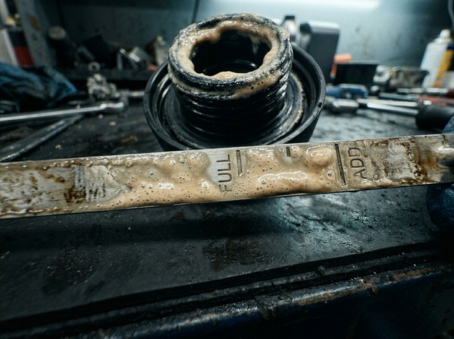
In cases where the water pump housing has cracked rather than simply leaking at the seal or gasket, coolant can enter the engine oil circuit. The result is a milky or creamy appearance on the dipstick and under the oil filler cap, caused by the emulsification of oil and coolant under heat.
This sign indicates that the damage has moved beyond the cooling system. Coolant in the oil removes the oil's lubricating properties and exposes every moving component in the engine to accelerated wear. On European vehicles with aluminum-heavy engine blocks and cylinder heads, including most of the models in the AllMakes Philippines vehicle range, the damage potential from sustained coolant contamination is significant and expensive to correct.
When this sign appears, the scope of the repair expands considerably. The pump must be replaced, but the engine oil and filter must also be flushed and changed immediately, and the root cause of the housing failure must be understood before the vehicle is returned to the owner.
Water Pump Failure: Warning Sign Severity Reference
Use this table as a quick reference for triage decisions when a customer brings in a vehicle with cooling system complaints.
| Warning Sign | Stage | What It Tells You | Recommended Action |
|---|---|---|---|
| Coolant drip near engine centre | Early | Shaft seal or gasket beginning to fail | Inspect and replace pump or seal before failure progresses |
| Grinding or whining noise at warm-up | Warning | Bearing wear in progress | Replace pump before bearing seizes; failure from here is a matter of time |
| Temperature gauge running higher than normal | Warning | Coolant circulation compromised | Full cooling system inspection required; pump likely nearing end of service life |
| Steam from under the hood | Critical | Pump has failed; engine at risk | Stop vehicle immediately; assess for head gasket and cylinder head damage after cool-down |
| Coolant contamination in engine oil | Critical | Housing cracked; oil circuit compromised | Replace pump, flush oil immediately, assess engine for secondary damage |
Frequently Asked Questions: Water Pump Failure
Q: What are the most common signs of water pump failure in the Philippines?
A: The earliest signs are a small coolant drip underneath the center of the engine and a grinding or whining noise from the engine bay during warm-up. As the pump continues to deteriorate, the temperature gauge begins running higher than normal before eventually reaching the critical stage of steam emerging from under the hood. Catching either the coolant drip or the bearing noise early gives the vehicle owner the most affordable and least disruptive repair options.
Q: Can a vehicle still be driven with a failing water pump?
A: A vehicle showing early-stage water pump failure, such as a weeping shaft seal or developing bearing noise, may still be driveable for a limited time, but continuing to drive it accelerates the failure timeline. In Philippine road conditions, where traffic heat and sustained engine idling are routine, a pump that is beginning to fail will deteriorate faster than it would in cooler, more consistent driving environments. The safest course is to have the pump inspected and replaced before the engine temperature becomes a risk to the owner and to the vehicle.
Q: How long should a water pump last before it needs replacing?
A: Water pump service life varies by vehicle type, driving conditions, and coolant maintenance history. On European vehicles with aluminum-heavy engines, coolant quality and change intervals matter more than mileage alone, because degraded coolant accelerates internal corrosion and seal wear that shortens pump life. For Filipino mechanics servicing SUVs and pickups regularly, aligning pump inspection with timing belt or timing chain service intervals is a practical approach, since the pump is accessible during those services and the labor cost is already committed.
Q: Is a grinding noise from the engine always a water pump problem?
A: Not always, but the water pump bearing is one of the more common sources of that type of noise, particularly when the sound intensifies with engine temperature and load. Other belt-driven components including the alternator, power steering pump, and idler pulleys can produce similar sounds. A systematic check of all belt-driven components, with attention to when the noise first appears and where it is loudest in the engine bay, is the fastest way to confirm whether the water pump is the source.
Why Catching Water Pump Failure Early Protects More Than Just the Engine
A mechanic's professional reputation is built over years and takes a serious hit from a single engine failure that should have been preventable. In the Philippine automotive aftermarket, where word of mouth between shops and fleet managers moves quickly, being the mechanic who caught a failing water pump before it became a blown head gasket is a story that gets repeated in the right way. Being the shop that returned a vehicle with an unresolved cooling problem that later caused engine damage is also a story that gets repeated, but in a way that is much harder to recover from.
The five signs covered in this article are not advanced diagnostics. They are systematic observations that any experienced mechanic can make during routine service or inspection. Building the habit of checking for coolant traces under the vehicle, listening for bearing noise during warm-up, and noting temperature gauge position during a test drive adds minutes to a service visit and can save a customer from thousands of pesos in engine repair costs.
Shops that integrate these checks into their standard service process build the kind of reputation that generates referrals without advertising.
Cooling System Parts from AllMakes Philippines
AllMakes Philippines is a cooling system specialist supplying OEM-sourced water pumps, radiators, thermostats, coolant hoses, and related components for European, Japanese, and American vehicles.
European vehicle coverage spans all models, including BMW, Mercedes-Benz, Audi, Volkswagen, Porsche, MINI, and Lexus. Japanese and American vehicle coverage focuses on the SUVs and pickups that Philippine shops and fleet operators work on most, including Toyota, Mitsubishi, and Ford.
Connect with our team to inquire for engine cooling parts here.